
Hi, it's Yusuke. It's been a while since my last newsletter.
This time, I'd like to introduce a Japanese photographer who has spent more than 20 years documenting Cambodia.
Last month, T3 PHOTO FESTIVAL TOKYO took place in Tokyo. It has become one of the city's major photography events, attracting 936,000 visitors in 2025.
This year, T3 BOOK MARCHE, an art book fair, was held alongside the festival. I applied with FAR EAST DARKROOM, and we were fortunate enough to be selected as an exhibitor.
It was great to see some familiar faces there, including members of VOID TOKYO and Tom from Third District Gallery, who were also exhibiting.
More than anything, I was happy to see so many people who had never encountered our work before pick up our zines and strike up conversations with us.
And right next to my booth was a man named motake.
$1
motake first visited Cambodia in 2005.
It was a solo trip with one simple purpose: to see Angkor Wat.
During that trip, he witnessed something that would stay with him.
Near the ruins, a little girl was playing.
Tourists kept taking pictures of her, calling her "cute." They casually put their arms around her shoulders, snapped their photos, then threw a dollar at her before walking away.

From the photobook Here, Before.
The girl looked sad. Still, she quietly picked up the dollar and went back to playing.
"They looked just like us, those foreign tourists. I don't know exactly why, but I felt somehow ashamed."
He didn't want people to see Cambodia through stereotypes. His body of work began with an impulse that was almost anger.
The Man Who Made a Movie Out of Photographs
After that first trip, motake returned to Cambodia many times. In 2009, he spent about two weeks there making a photo-movie called Cambodian Taxi Driver.
He first wrote the novel himself, then negotiated with locals to secure locations that matched the scenes in his story.

From the zine Cambodian Taxi Driver
The lead actor was an actual motorcycle taxi driver. He would explain the atmosphere he wanted for each scene, saying things like, "This is what's happening in the story, so I need this kind of mood." The driver responded with some wonderful expressions.
He handled everything himself, from planning to shooting.
Why a taxi driver?
Because they're often the first people travelers encounter in Cambodia, yet almost nobody stops to wonder what kind of life they lead.

From the zine Cambodian Taxi Driver
The photo-movie premiered as the opening film of the 2011 Cambodia International Film Festival.
Then, in 2026, motake revisited the original work, restructured it, and turned Cambodian Taxi Driver into a printed zine.
As I listened to his story, I felt a little frustrated with myself.
I originally wanted to make films, too. During university, I worked part-time at a movie theater and even wrote something resembling a screenplay. But I was too embarrassed to show it to anyone.
Later, in New York, I came across Bill Cunningham's idea that "the street is the greatest runway of all." I threw myself into street photography, and that eventually led me to the Shinjuku work I do today.
motake laughed when I told him this.
"Writing a screenplay is embarrassing, isn't it? I guess I just pushed past that feeling and made it anyway."
Bringing Back What Was Lost
Here, Before. is a photobook compiled from 20 years of snapshots, taken by motake between 2005 and 2025.
Under the Khmer Rouge regime, Cambodia lost so much. Its people, culture, dances, and songs. Through genocide, starvation, and disease, approximately two million people lost their lives, nearly a quarter of the country's population at the time.

From the book Here, Before.
This book looks at what once existed here, and what has slowly been reclaimed.
The colors are unusual.
motake digitally recreated the distinctive color palette of Solaris, a film stock that is no longer manufactured.

Students crossing the river on their way to school. From the book Here, Before.
For him, bringing back the colors of a discontinued film became a way of reflecting Cambodia's own journey of reclaiming what had been lost.
Only the chapter looking toward the future retains the colors of the present.
A boy he met in 2005 has since become a photographer and now has a daughter of his own. One of the crew members who helped with the production of Cambodian Taxi Driver now runs his own guesthouse. The prints motake gave him back then are still hanging on his walls.

From the book Here, Before.
I Can't Call Myself a Photographer
There was one thing he said that really stuck with me.
"I can't call myself a photographer."
When he looks at people who have devoted their entire lives to photography, he feels he can't describe himself with the same word. So he calls himself a "photo artist" instead, almost as a way of getting around it.
I feel the same way. Until my work finds its way into a museum collection, I don't think I can confidently call myself a photographer.
But he hasn't stopped moving forward.
He's currently exploring platinum-palladium printing, a process that brings digital photography and film together. Someday, he hopes to carry a large-format camera back to Cambodia.
Stay Unfinished.
A man who has spent 20 years photographing a country is still looking ahead, ready to make his next pictures.
Discover motake's Works
The two works featured in this newsletter, Cambodian Taxi Driver and Here, Before., are now available in limited quantities at FAR EAST DARKROOM.
Both are beautifully crafted works, each well worth spending time with. I'd love for you to take a closer look at them through the links below.
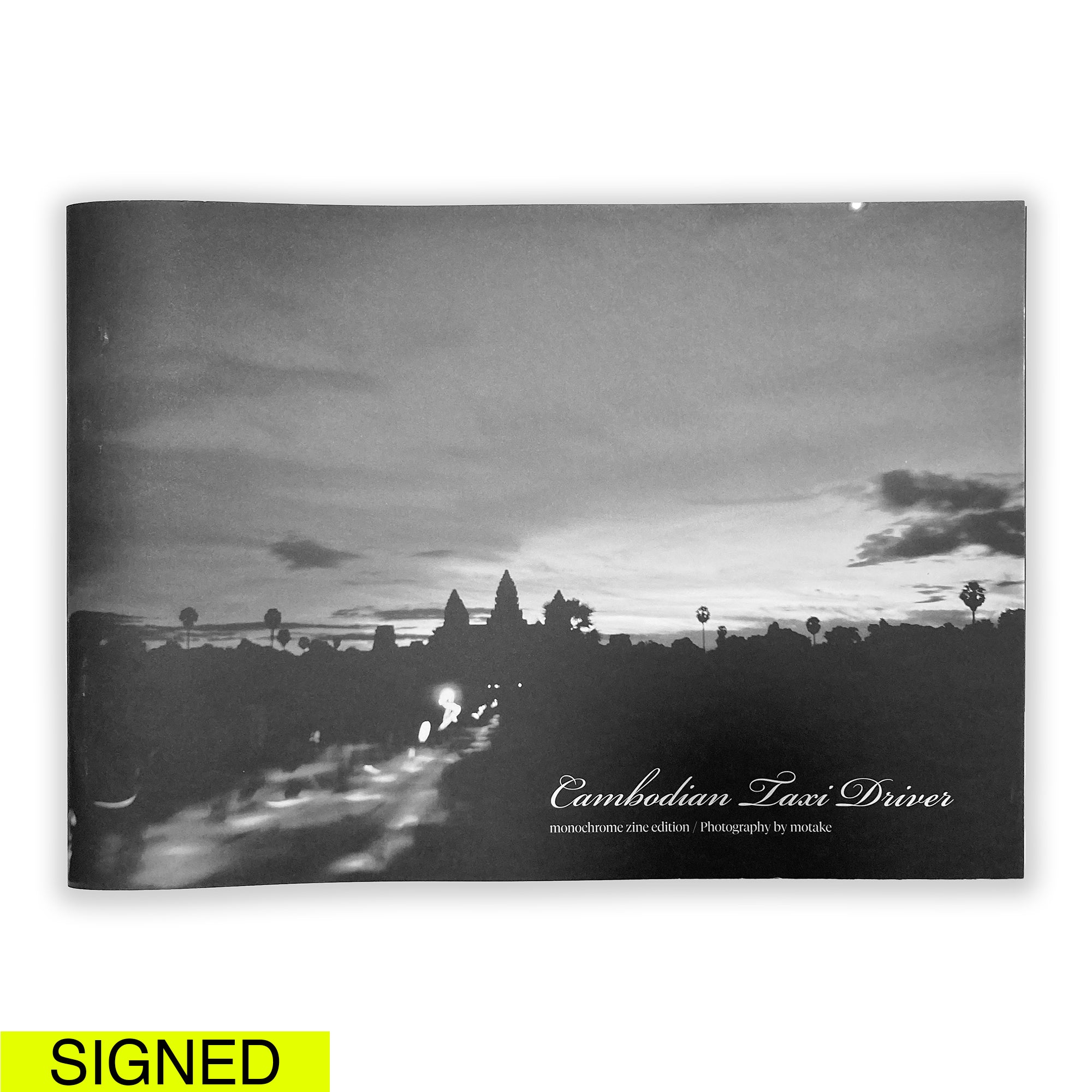
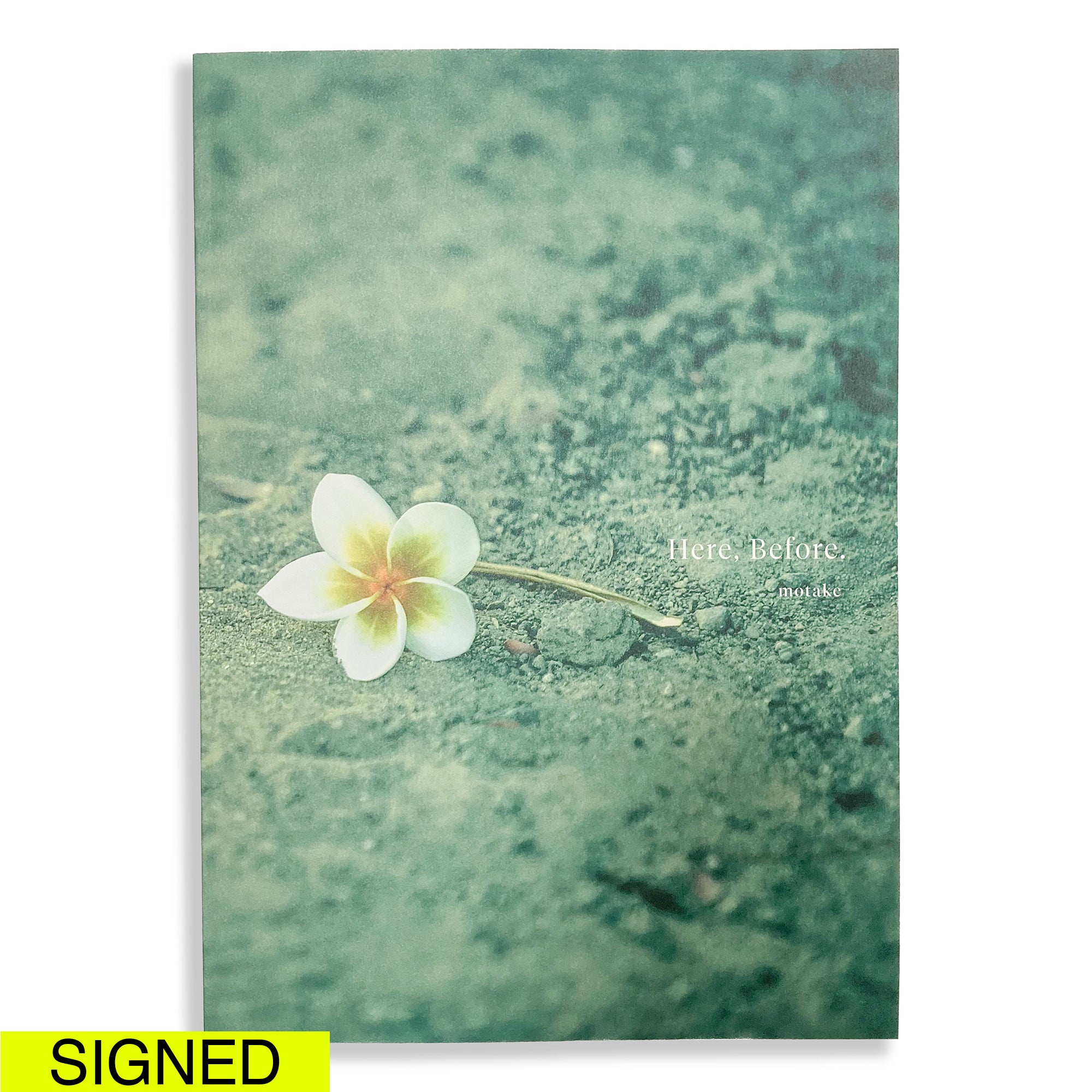
If you purchase both together, you'll also receive a free DVD of motake's 2010 photo-movie, Cambodian Taxi Driver.
Only the first five orders will receive the DVD, so don't wait too long.

That's all for today. See you in the next newsletter.
Yusuke
🦖 Come hang out with me on Instagram → @_nuts.tokyo_
🪐 New videos on zines & photography up on YouTube
🧃 Curious about Japanese and Asian zines? Visit FAR EAST DARKROOM.

